

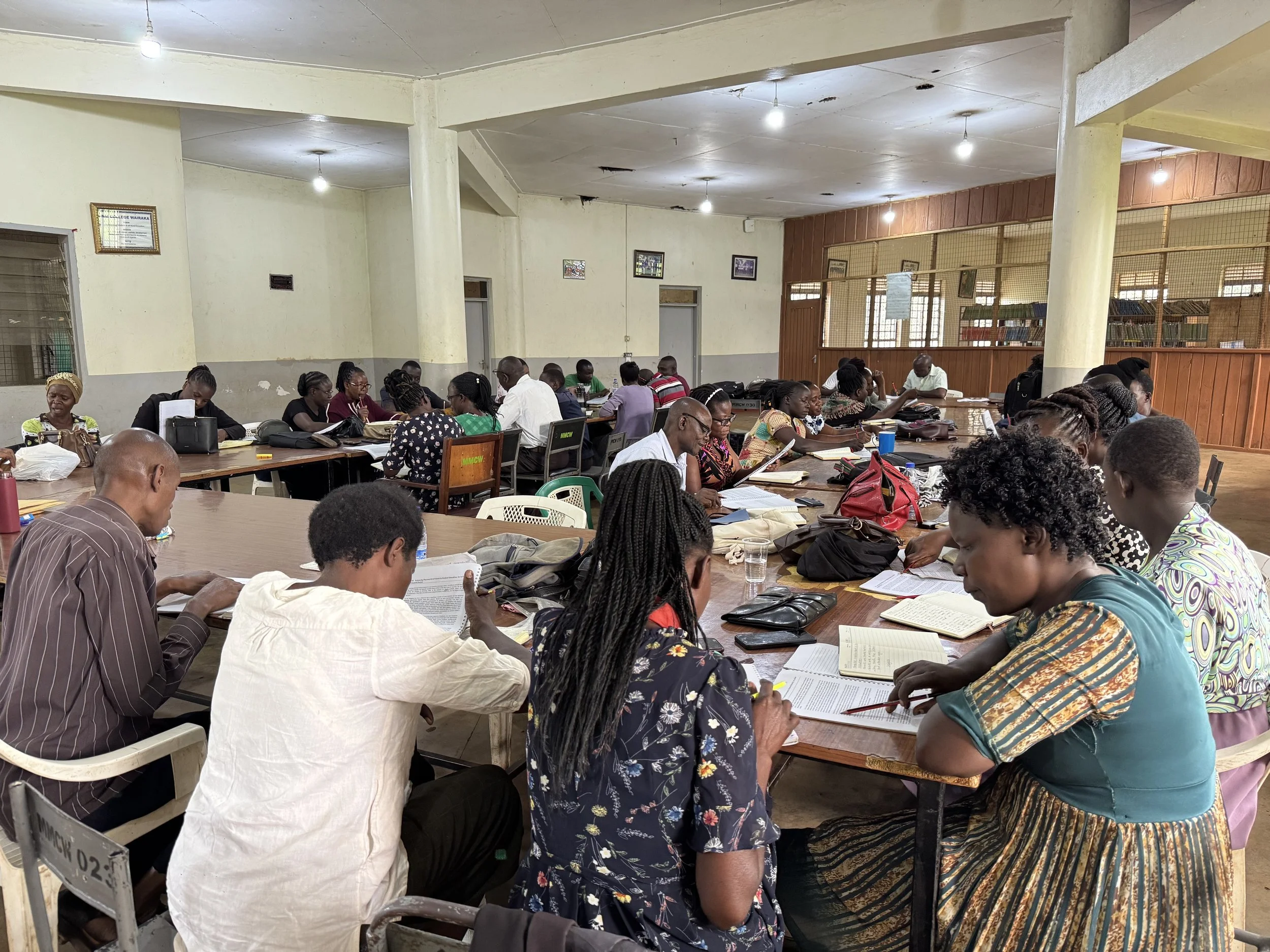
Learning to Learn teacher development seminar
30 June - 3 July 2026
Introduction
In Uganda, as in much of the world, conventional approaches to teacher training have too often been informed by narrow assumptions: that knowledge is transferred from expert to novice, that educational reform consists in adopting techniques or standards devised elsewhere, and that teachers’ work is confined to classrooms isolated from the life of their communities. Such assumptions limit the scope of education and diminish the agency of educators.
Through the Learning to Learn (LtL) teacher development program, Kimanya-Ngeyo has sought an alternative vision, one that would place the teacher at the center of the development process. Building on an approach to education for development adopted by the Foundation for the Application and Teaching of Science (FUNDAEC), education is viewed not merely as the acquisition of skills or information; it involves the nurturing of capacities—intellectual, moral, and spiritual—that allow individuals to participate meaningfully in the advancement of society. Teachers are not deliverers of curricula but co-learners, facilitators of understanding, builders of community, and researchers engaged in processes of inquiry and action. The LtL program has thus become an expression of our efforts in this area. It is an educational process that builds the capacity of educators to think deeply, act purposefully, and connect their practice and professionalism with the broader goal of social change.
Professional development, accordingly, is not a package delivered to schools but a dynamic process in which teachers, learners, and communities generate and apply knowledge in pursuit of collective progress. To realize this vision, the LtL program organizes learning in cycles of study, reflection, and action, grounded in the realities of Ugandan classrooms and offers a model in which teachers’ agency and moral leadership are at the forefront of educational and social advancement.
For a detailed overview of the LtL program and its content, click here.
Why LtL? Emerging Evidence
Since 2015, the LtL teacher development program has engaged more than 2,300 teachers across Uganda, equipping them with a renewed sense of purpose, greater confidence in their agency, and practical tools for integrating inquiry, reflection, community engagement and service into their teaching. The next few years will see close to 4,000 additional teachers complete the program as its adoption accelerates in Uganda.
Results from a randomized controlled trial evaluating the LtL program at the primary school level in Uganda found that the program led to substantial improvements in both student learning and teacher practice (Nourani, Ashraf, & Banerjee, 2025). Students in schools with teachers who participated in the LtL program scored significantly higher on national Primary Leaving Examinations (PLE) and showed gains in subject performance. They also advanced further in school, were more likely to transition to secondary education, and demonstrated stronger critical thinking, creativity, and scientific competencies, including designing and presenting experiments. Teachers participating in the LtL training also exhibited more effective pedagogy, greater knowledge of their students, and increased collaboration with colleagues. Long-run effects showed students from schools in the training group performed better in secondary school and attained more years of education. Overall, the training was highly cost-effective—ranking in the top 5% of education interventions globally. Findings from a subsequent randomized study of effects at the secondary level are currently being finalized.
A recent qualitative study of the LtL program can be accessed here: Transformative teacher professional development: A qualitative case study of a metacognitive approach to teacher training in Uganda.
ABOUT THE WEEKLONG SEMINARS
Beginning in 2026, Kimanya-Ngeyo Foundation will host a series of four-day in-person seminars near its offices in Jinja City. Like-minded professionals, institutions, and organizations interested in teacher education are invited to participate.
The seminar offers an opportunity to engage deeply with the LtL program, gain a clearer understanding of its approach, and reflect on broader educational needs within participants’ own contexts. This exploration is intended to support a deeper examination of teacher education needs in the country, as well as wider goals for education in the region.
Participants in the seminar will be provided with meals, accommodation, as well as local transport to visit Kimanya-Ngeyo’s activities during the days of the seminar. Participants are kindly requested to arrange and cover their own travel to and from Jinja City.
Seminar Structure and Agenda
On each day of the seminar, alongside examining LtL in detail, participants will collectively explore the educational needs of Uganda, and where relevant, their respective countries. By becoming acquainted with the logic, approach, and impact of LtL in the Ugandan context, it is hoped that the seminar will provide the opportunity to reflect and explore broader needs in the field of education and to exchange ideas for enhancing their own educational interventions.
The overall structure for the four-day seminars is as follows:
❋ Day 1 – Introduction to LtL and program overview
❋ Day 2 – Deepening Engagement with LtL
❋ Day 3 – Field Visit and Practitioner Perspectives
❋ Day 4 – Consolidation and Reflections
Participants will engage in a focused study of LtL content, accompanied by guided discussions to deepen understanding and encourage reflection on its application in different contexts.
Participants will engage in a focused study of LtL content, accompanied by guided discussions to deepen understanding and encourage reflection on its application in different contexts.
Participants will take part in a field visit to observe teachers in the classroom or during an ongoing training session, depending on the time of year. The day will also feature a panel with teachers and/or students, offering firsthand perspectives and reflections on their experiences.
Participants will continue their study of LtL content, engage further with teachers and/or students, and take part in closing reflections focused on key learnings and possible ways forward.
The seminar will run over four days (Tuesday to Friday), with participants expected to arrive in Jinja on Monday evening. Participants traveling from nearby locations may alternatively arrive on Tuesday morning before the start of the seminar.
EXPRESSION OF INTEREST
If you wish to participate in this seminar, we kindly invite you to complete a survey to express your interest. Selected participants will be contacted with confirmed details and next steps.
REGISTRATION DEADLINE: 1 June 2026